

Answer first: you do not need a big yard or fancy equipment to wear a toddler out indoors. Gross-motor play (the big-body stuff: climbing, jumping, balancing, crawling, throwing) can happen in a living room with couch cushions, painters tape, and a laundry basket. A few pieces of gear (a balance beam, stepping stones, a wobble board, a scooter board, a mini trampoline) help on the longest days, but most of it is free. Here are the activities that actually burn energy, plus the gear worth owning.
Some days going outside just is not happening, and a toddler with unspent energy is a force of nature. Gross-motor play is how you channel it, and it also builds the core strength, balance, and coordination behind everything from climbing stairs to eventually riding a bike. Here is a pile of indoor ideas that need almost nothing, and the few things worth buying if you want them.
Heads up: some links below are affiliate links, which means Quiggly may earn a small commission if you buy through them, at no extra cost to you. We only recommend stuff we'd actually put in our own kids' hands. As an Amazon Associate, Quiggly earns from qualifying purchases.
Free indoor gross-motor activities
- Couch-cushion obstacle course. Pull the cushions onto the floor and make a crawl-climb-jump path. Rearrange it and it is a brand-new course.
- Tape lines on the floor. Painters tape becomes a balance line to walk, a long jump to leap over, or a hopscotch grid. The cheapest gross-motor toy there is.
- The floor is lava. Pillows and mats as safe spots, the rug as lava. Instant balance and jumping practice with a story attached.
- Laundry basket everything. Toss soft balls or rolled socks into a basket (throwing and aiming), or let a smaller toddler push and pull a loaded one (heavy work that is weirdly calming).
- Animal walks. Bear crawl, crab walk, bunny hop, and frog jump across the room. Builds strength and coordination, and gets big giggles.
- Dance party. Never underestimate two songs and permission to go wild. Add freeze-dance for a little impulse control.
- Balloon keep-up. A balloon that must not touch the floor buys a shocking amount of time (supervise, popped balloons are a choking hazard).
- Heavy work. Carrying, pushing, and pulling real things (a stack of books, a basket of toys) is calming, regulating input, and doubles as a real job.
Rotate a couple of these and you have a rainy-day plan that costs nothing.
A few pieces of gear worth owning
If you want equipment for the long-winter or no-yard stretch, these earn their space, and most fold or stack away:
Balance beam and stepping stones

A little floor obstacle course that builds balance and coordination, invents its own games (the floor is lava, again), and stores flat when you need your living room back. The workhorse of indoor gross motor.
Stepping stones (the trendy ones)
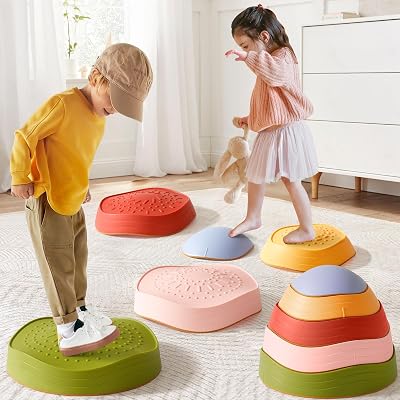
Standalone stepping stones are all over the internet for a reason: kids hop from one to the next, you rearrange the path, and it is endless balance-and-jump practice in a small footprint. Look for a non-slip base so they stay put on hard floors.
A rocking shell (the Bilibo)
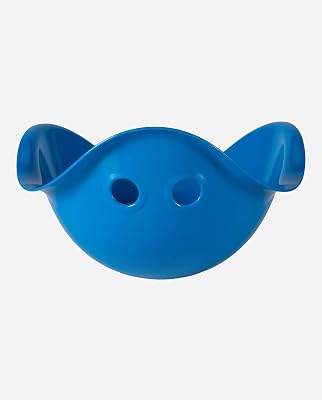
The half-shell that does a hundred things: kids sit and spin in it, flip it over to rock and balance on top, use it as a stepping stone, a helmet, a hiding spot, or a bucket. It is open-ended gross-motor and imaginative play in one nearly indestructible piece, and it grows from toddler through the big-kid years. Fat Brain's Bilibo is the original.
A wobble balance board

A wobble board builds core strength, balance, and focus, and this one adds a maze on top so the challenge becomes stay balanced and steer the ball. Perfect for getting the wiggles out in a small space.
A scooter board

The flat rolling board from every school gym class. Kids lie, sit, or kneel and scoot themselves around with the handles, which is a serious core and arm workout disguised as pure fun. This one has safety handles and rolls on any hard floor.
A mini trampoline with a handle

The ultimate get-the-energy-out tool for a rainy day. A toddler-sized trampoline with a foam handle to hold onto, foldable for storage. Bouncing burns energy and builds coordination like nothing else indoors. (Supervise, and one jumper at a time.)
A couple of tips
- Clear a zone. Move the coffee table, define a soft space, and let them go.
- Match the energy to the time of day. Big-body play earlier helps; right before bed can backfire.
- Heavy work calms. If your kid is dysregulated, pushing, pulling, and carrying often settles them better than more stimulation.
For the toy side of motor development, see the best toys for motor skills (fine and gross), the two-minute setups in fine motor activities for toddlers, and, since big-body helpers love a job, toddler chores by age.
The takeaway: a living room, some tape, and a few couch cushions will out-tire a toddler more than most toys. Add a beam, some stepping stones, or a mini trampoline for the long days, and you are set.
As an Amazon Associate, Quiggly earns from qualifying purchases. We only recommend products we'd give our own kids.